
French herbs are added in most French cooking, and French cooks would never be without herbs in their kitchen. They are indispensable if you want to capture the flavor of real French cooking. Don't be bashful, be flavorful!
Learn the best way to season food as you cook, or other essential kitchen cupboard commodities, like the type of cooking oils, can make a huge difference.
Jump to:
- What Are French Herb Blends?
- A List Of Traditional French Herbs Mixtures
- What Is Herbes de Provence?
- 🌿Herbes de Provence Recipe
- Fines Herbes
- Bouquet Garni Or "The Broth Posy'
- 🌿 Recipe For Bouquet Garni
- Persillade
- French Herb Salt
- Single Herbs Often Used In French Cooking
- Basil
- Bay (Laurier)
- Chervil (Cerfeuil)
- Fennel (Fenouil)
- Parsley (Persil)
- Rosemary (Romarin)
- Marjoram (Marjolaine)
- Sorrel
- Tarragon (Estragon)
- Thyme (Thym)
- French Herbs Tips
- 💬 Comments
What Are French Herb Blends?
There's something wonderfully simple about the way French cooks use herbs. A few sprigs of something fresh, a splash of wine or vinegar, and even the most inexpensive cut of meat become a dish that makes you stop and love it. The same goes for those little herbal touches that brighten French salad dressings - small additions that make all the difference.
Fresh herbs are always the first choice in France. Their fragrance is at its best the moment you chop, crush, or warm them, when those natural oils release and fill the kitchen. That's why they bring such life to a recipe.
Of course, we don't always have fresh herbs on hand. Good dried herbs can still work beautifully as long as they're stored well - small jars, airtight lids, and a cool, dark cupboard to keep their flavor intact.
And when you do have an abundance of fresh herbs, it's easy to dry them yourself. Just tie them in small bundles, hang them somewhere airy, and once they're fully dry, tuck them into jars for later. When using dried herbs, it is advisable to crush them before adding them to the pot to release the flavor.
A List Of Traditional French Herbs Mixtures
The most famous or classic mixtures of French herbs used in French cooking are:
- Herbes de Provence
- Bouquet Garni
- Fines Herbes
- Persillade
- French Herb Salt
What Is Herbes de Provence?
Used in a wide range of Provençal dishes, Herbes de Provence is easy to make with a supply of dried herbs.
Simply put together 2 tablespoons each of rosemary, thyme, basil, marjoram, and parsley, and 1 tablespoon each of fennel seed, oregano, and tarragon in a mixing bowl; mix thoroughly and store in an airtight container.
🌿Herbes de Provence Recipe
Ingredients
- 2 tablespoons rosemary
- 2 tablespoons thyme
- 2 tablespoons basil
- 2 tablespoons marjoram
- 2 tablespoons parsley
- 1 tablespoon fennel seed
- 1 tablespoon oregano
- 1 tablespoon tarragon
How To Make Herbes de Provence
- Place all the ingredients in a bowl and mix well.
- Store in an air-tight container.
- When ready to use, place the amount you need in a mortar and pestle and give it a little crushing to release the flavor.
It is delicious in my Roasted Chicken Provencal recipe.

Fines Herbes
Fines herbes is often featured in French recipes, consisting of equal amounts of French herbs, such as chopped fresh parsley, chives, chervil, and tarragon.
🌿 Recipe For Fines Herbes
Ingredients
Equal Amounts
- chopped fresh parsley
- chopped fresh chives
- chopped fresh chervil
- chopped fresh tarragon
How To Make Fines Herbes Blend
- Place all the ingredients in a bowl, and mix well.
- Then add them to the pot near the end of cooking in the last hour, as they will lose flavor if cooked too long.
A version of this lovely, fragrant mix is used in the dressing for my French Grated Carrot Salad, which you should try.
Bouquet Garni Or "The Broth Posy'
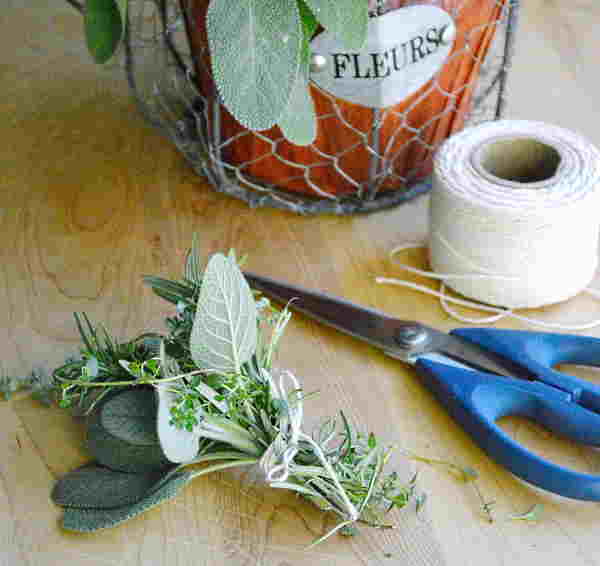
This is a small bunch of French herbs tied together and used in French cooking.
It usually consists of three stalks of parsley, a sprig of thyme, and one bay leaf.
The thread that ties them helps facilitate the removal of the herbs at the end of the cooking. Most often, I use a nylon net bag that fresh fruit and produce are sold in, which I wash and dry. This way there are no loose bits floating around in the dish.
Other additions to the Bouquet Garni are a small stick of celery, a sprig of marjoram, and in Provençal cooking a piece of dried orange peel is often used too.
🌿 Recipe For Bouquet Garni
Ingredients
- 3 stalks of parsley
- a sprig of thyme
- 1 bay leaf
Optional Additions
- 1 small stick of celery
- a sprig of marjoram
- In Provençal cooking, a piece of dried orange peel (I save citrus peels in a bag stored in the freezer)
Tie the ingredients together or place them in a bag and add them to the pot of food while cooking. Remove when the dish is flavoured sufficiently or before serving.
Broths or Bone Stock Recipes often call for a bouquet garni to be added while simmering.
Persillade
🌿Persillade is one of the simplest-and most beloved-herb mixtures in French cooking. At its heart, it's nothing more than finely chopped fresh parsley and garlic, yet this humble mixture brings an instant burst of flavor to a dish. French cooks use persillade the way others might use a squeeze of lemon or a finishing drizzle of olive oil: as a final touch to bring everything to life.
Traditionally, persillade is added at the end of cooking or sprinkled over a finished dish so the parsley stays vibrant and the garlic keeps its lively aroma. It's wonderful tossed with roasted potatoes, stirred into sautéed mushrooms, scattered over grilled fish, or spooned onto a simple omelette. A little goes a long way, but its effect is a fresh, green punch of taste delight.
There are regional variations, of course. Some cooks add a bit of lemon zest for extra brightness, a spoonful of olive oil to make it spoonable, or even a handful of breadcrumbs for a Provençal-style topping. However, the basic persillade blend remains unchanged: it's a quick, fragrant mixture that captures the essence of French home cooking.
How to Make Persillade
Ingredients:
- fresh flat-leaf parsley
- fresh garlic
- pinch of salt
Method:
- Finely chop the parsley.
- Mince the garlic into a paste.
- Combine with a pinch of salt.
- Add at the end of cooking or sprinkle over the finished dish.
Variations
- With lemon zest: adds brightness for fish, chicken, or vegetables.
- With olive oil: creates a loose, spoonable mixture-great for drizzling.
- With breadcrumbs (Provençal style): perfect for gratins or topping roasted vegetables.
French Herb Salt
🧂 An aromatic blend of coarse sea salt and finely chopped French herbs. It is made up typically of rosemary and thyme, but sometimes parsley, bay, or tarragon are added, depending on the dish it will be added to. After the herbs of choice and sea salt are mixed together, the sea salt will absorb the essential oils from the fresh herbs as they dry, resulting in a superb, fragrant meal enhancer.
How To Make French Herb Salt
Ingredients
- ½ cup coarse sea salt
- 2 tablespoon finely chopped fresh rosemary
- 2 tablespoon finely chopped fresh thyme
Optional: - 2 tablespoon finely chopped fresh parsley
- 1 crushed bay leaf, 1 teaspoon dried tarragon, or lemon zest
Step-by-step Guide
- Combine the salt and chopped herbs in a bowl.
- Spread the mixture on a parchment-lined tray.
- Air dry for 24-48 hours, or dry in a low oven (no higher than 200°F / 95°C) for 20-30 minutes.
- Once fully dry, crumble any clumps and transfer to an airtight jar.
Storage: Keeps for several months in a cool, dry place.
Single Herbs Often Used In French Cooking
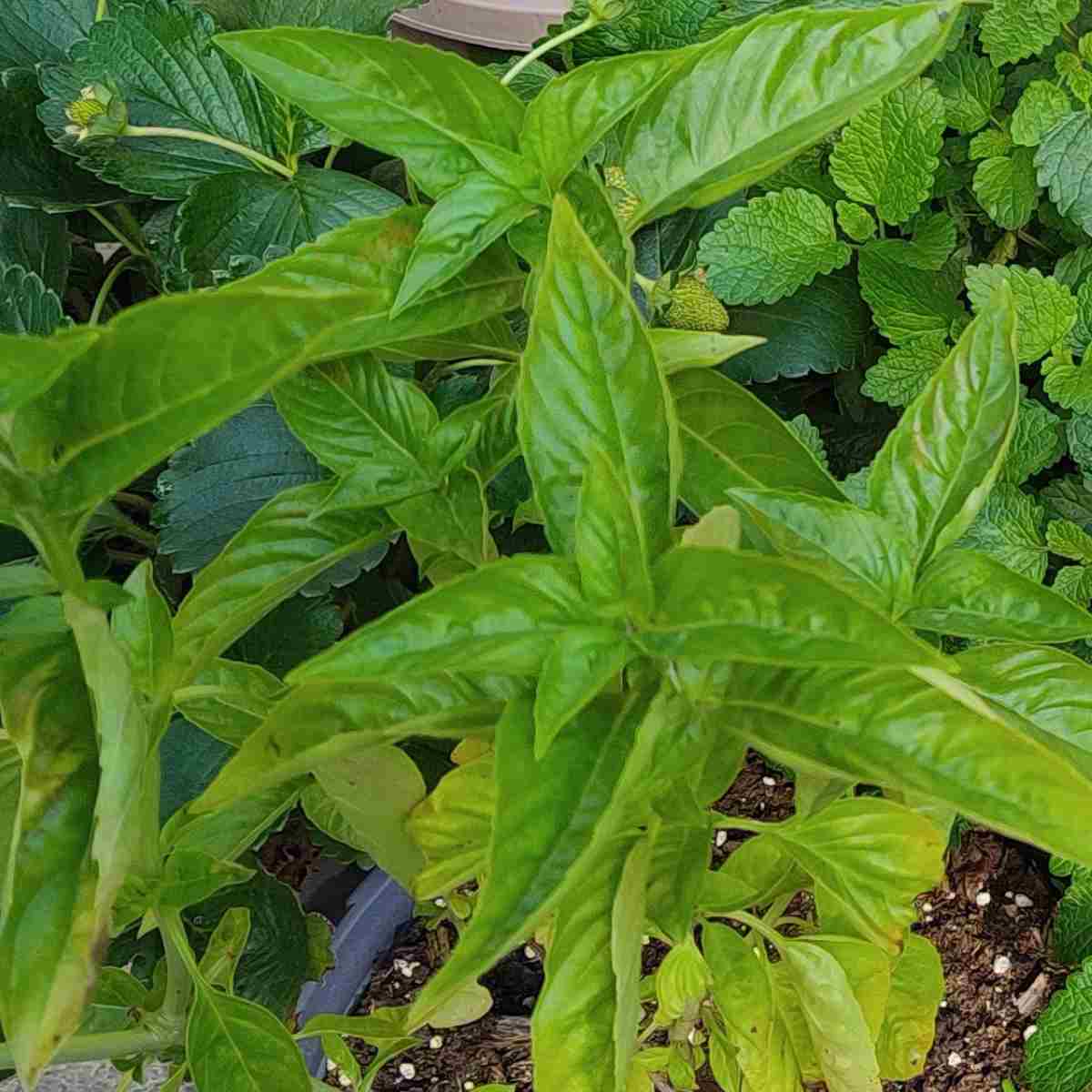
Basil
Bay (Laurier)
The sweet bay or bay laurel is a perennial evergreen tree which is the only form of laurel to be used in cooking.
Bay is grown from a small plant and needs protection during the cold weather.
They can be grown in tubs and make beautiful displays for your garden and growing herbs is easy this way.
Bay leaves are shiny, smooth and dark with a strong aromatic scent. They can be picked for use throughout the year.
Bay can be used either dried or fresh to flavor sauces like this basic tomato sauce, and stews or used in marinades.
It is indispensable in a bouquet garni, or 'the broth posy' as it is also known when used to flavour good cooking.
Bay adds its spicy flavour to meat and vegetables, fish, soups and stews.
You can store a leaf or two in a jar of rice or add it to your rice pudding for a delicious flavour.
Chervil (Cerfeuil)
Chervil is a delicate herb almost fern-like with a refreshing spicy flavour.
It can be used generously so you could grow more than one plant in your garden.
It can grow to about 45cm/18ins tall and its leaves resemble those of French parsley and it has clusters of small white flowers. It is grown from seed in the spring or summer, and inside in winter.
The leaves have a delicate flavour and are used to enhance vegetables, chicken, fish, veal, salads, egg dishes and tomatoes.
It is a favourite of the French herbs for giving flavour to soups, sauces and omelettes.
Chives (Ciboulette)
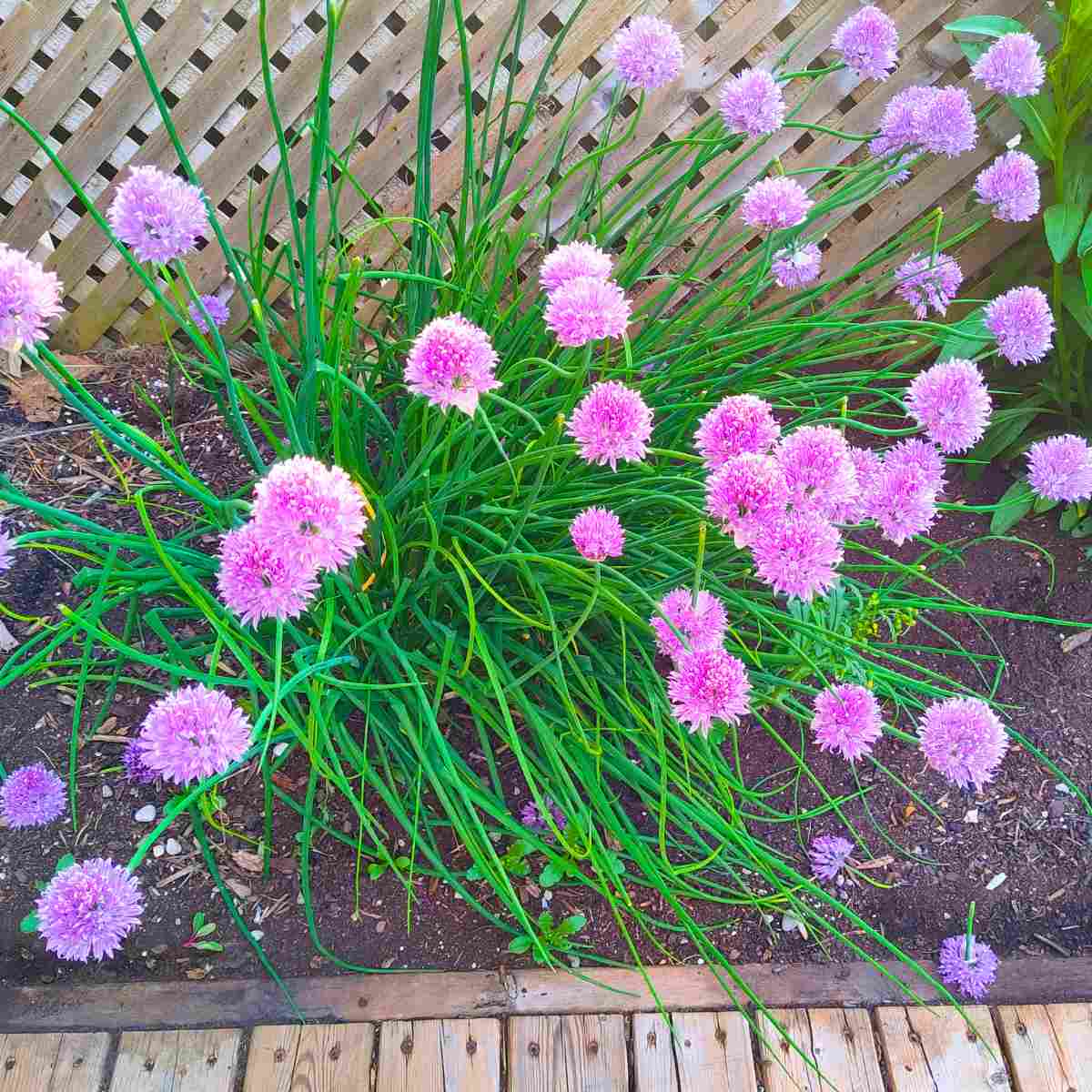
Chives are an important herb in the French kitchen, and they have the most delicate onion flavour, which makes them a wonderful seasoning for many dishes.
Chives are a hardy perennial plant grown from a clump of bulbs planted in autumn or spring. You can increase them by dividing them.
They can be grown from seeds, but it is a slow process. It is easier to divide the established clumps.
They can be grown in window boxes and tubs as well as in the garden.
The flowers are very beautiful in a shade of lavender pink and can also be used in salads. They make a really stunning display when in flower.
The grass-like leaves are used to garnish soups, salads, egg dishes, fish, chicken and veal. They are delicious with salads and most vegetables.
Fennel (Fenouil)
Fennel is a beautiful, tall and graceful perennial herb with fine feathery green leaves and bright yellow flowers. It looks very much like dill, but the flavour is a sweet anise which is very different.
It can be grown from seed in early spring, and the main plants are divided every three to four years.
Fennel is most well known with fish, and the seeds or leaves give an excellent flavour when added to the water for poached or boiled fish.
The leaves give a wonderful flavour to fish sauces or will counteract the oiliness of rich fish.
The leaves can be added to salads or raw or cooked vegetables.
The seeds can also be used whole or ground to flavour bread, dressings, savoury biscuits, soups and many sweet pickles.
The bulbous root used as a vegetable comes from the Florentine variety, but this is much more difficult to cultivate.
Parsley (Persil)
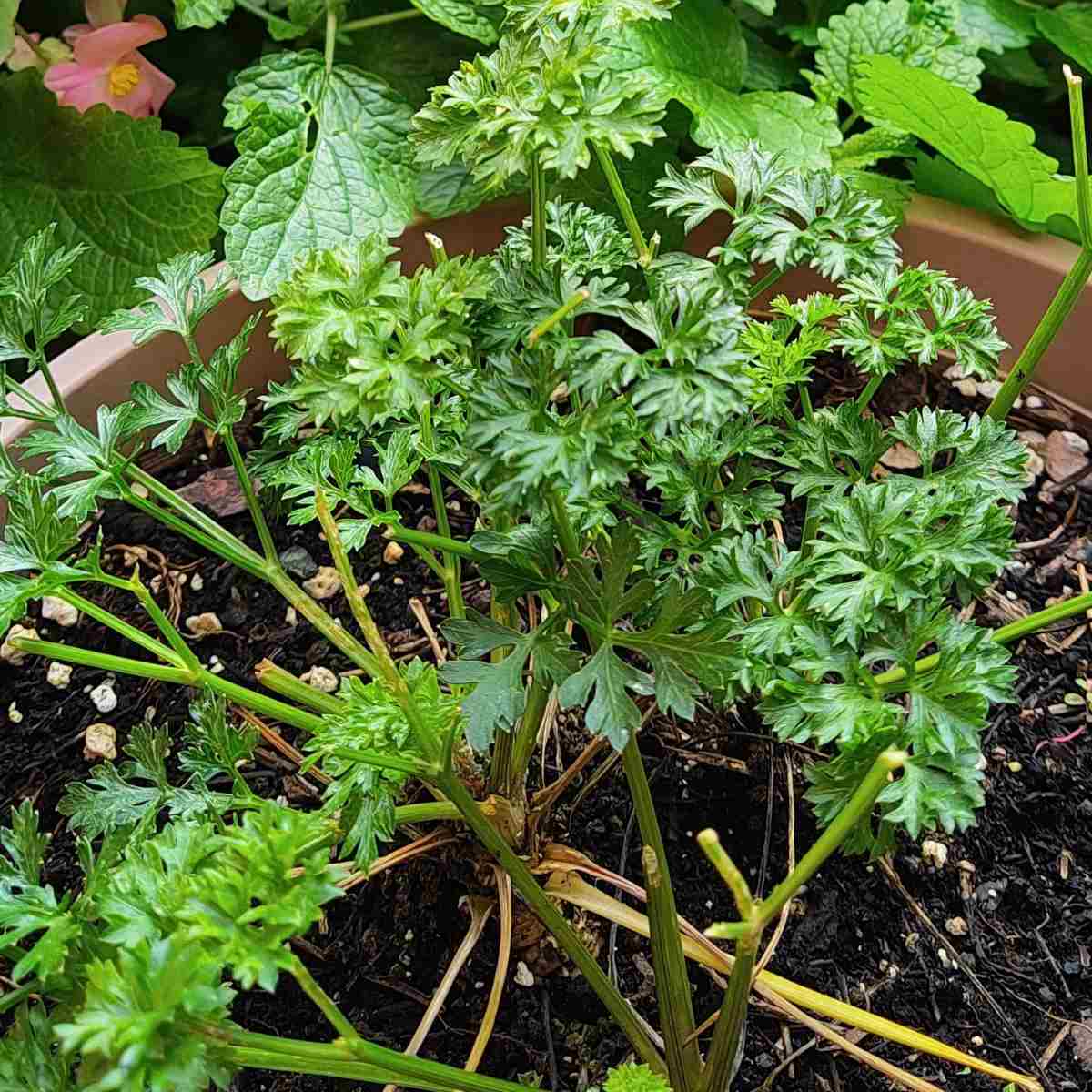
All varieties of parsley are hardy biennials, but are mostly treated as annuals.
Of course, no herb garden would be complete without its parsley!
The two most popular ones are the curly leaf parsley and the French or flat leaf parsley, which undoubtedly has the better flavour.
It is rich in vitamin C, so it is valuable in your diet.
They can be grown from seeds, but they take about three to four weeks to germinate.
It is a good edging plant in your herb garden and is also suitable for containers inside or outside.
The amount of parsley you use to flavour dishes is very much a matter of taste, but as a general rule, you can add it generously.
The chopped leaves can be added to green salads, soups, sauces and cooked vegetables.
It is beautiful when fried in oil until crisp and added to accompany fish.
Parsley added to dishes with garlic will soften the flavour.
Rosemary (Romarin)
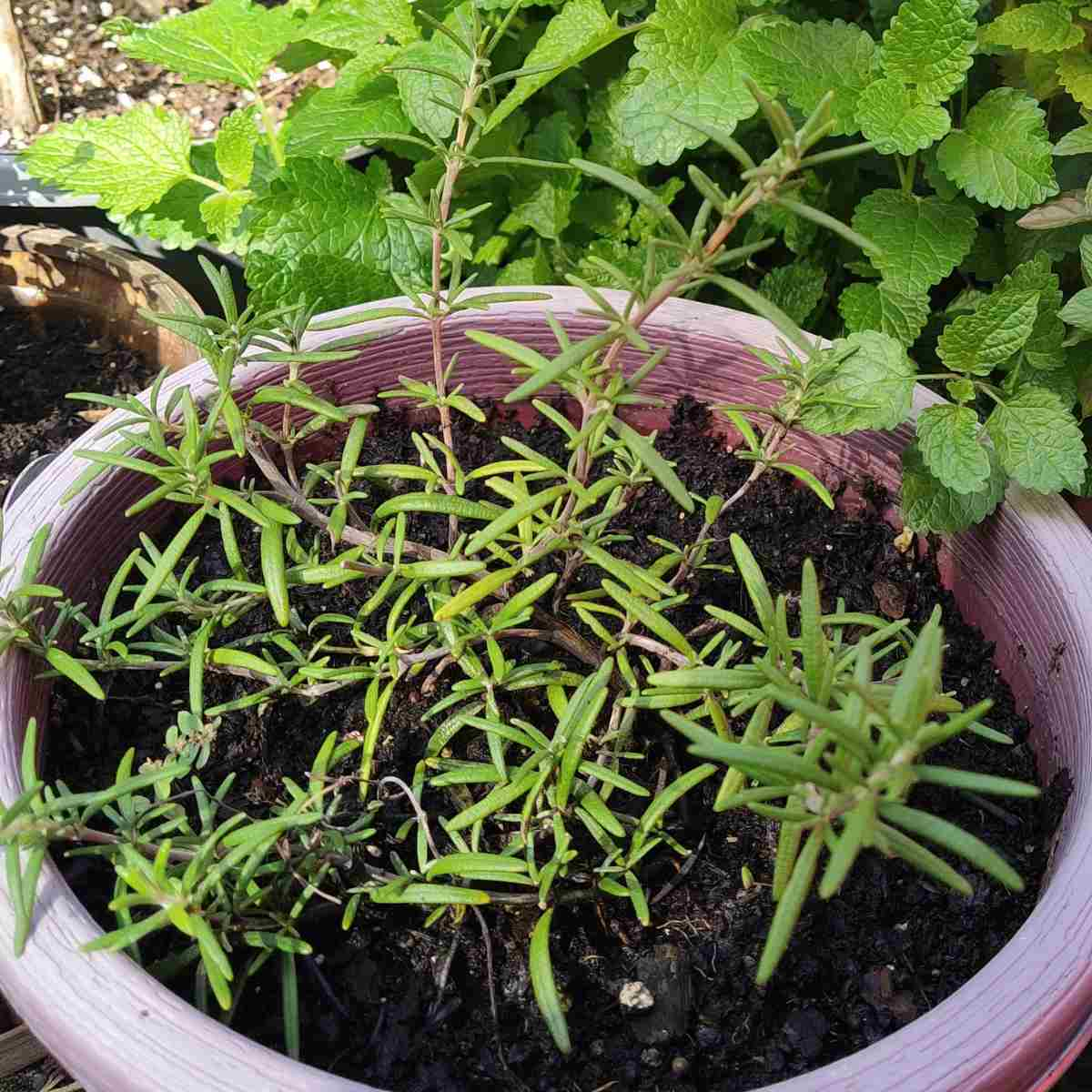
Rosemary is a relative to the mint family, and the name is derived from its Latin origin to mean "dew of the sea."
Rosemary is very common in Mediterranean cuisine and has somewhat of a bitter astringent taste to it.
Growing herbs is easy with Rosemary as it is one of the French herbs that can be grown from cuttings or from a small plant in spring.
The leaves are short, narrow, and tough, rather like pine needles. It grows quite bushy and needs some cutting back once established.
It makes a wonderful shrub with a strong aromatic smell and is the perfect addition to your herb garden.
Rosemary added to lamb is a classic favourite, but is equally good with other meat dishes and with fish such as halibut.
Try it with eggs and cheese, in biscuits/cookies, jams, and jellies. It can also be added to fruit salads, wine, and fruit cups for an unusual flavour.
Marjoram (Marjolaine)
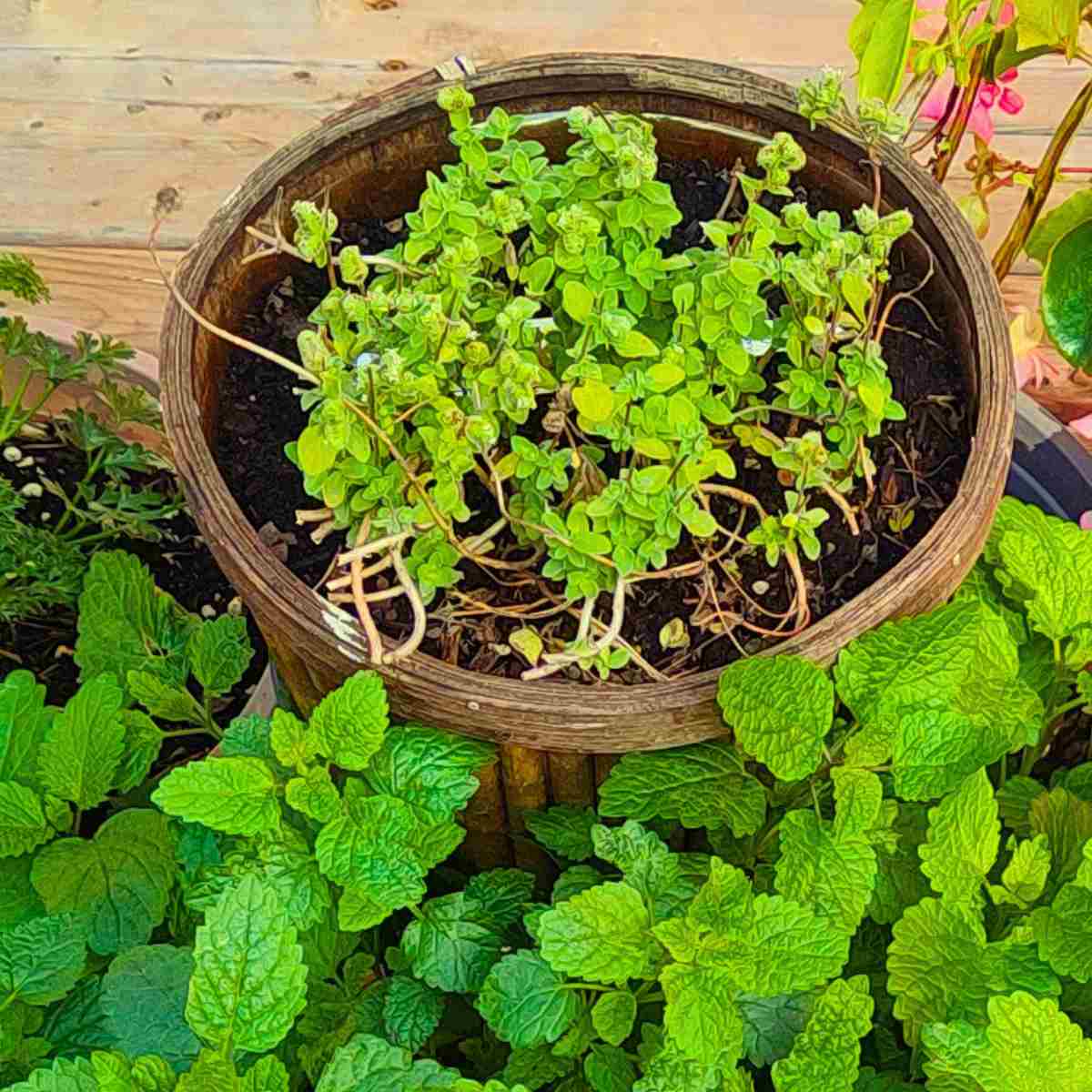
Marjoram is a relative of the mint family. You get the most flavour from Marjoram if you use fresh leaves rather than dried marjoram.
There are three types of marjoram, but it is sweet marjoram that has the best flavour for cooking.
It is a compact and bushy plant with small flowers that look like little green knots.
Sweet marjoram is grown from seed in the spring, and the seedlings are planted in early summer.
Although Marjoram is sweet and mild, it is also at the same time minty and has a hint of citrus.
Marjoram blends very well with Bay Leaves, pepper, and Juniper.
Excellent with meat, especially meatloaf and vegetables such as marrow and potatoes.
Some added to the rice in stuffed green peppers make a wonderfully tasty dish.
Often included with other herbs in a bouquet garni.
Sorrel
The true French variety of sorrel is the best to use for your cooking as it has the best flavour.
Sorrel has lovely fleshy green leaves and has an astringent flavour.
It is grown from seed sown in early spring and it prefers a moist humid rich soil.
It is a slender plant about 60 cm high, with edible, oblong leaves.
It has whorled spikes of reddish-green flowers, which bloom in summer.
This is one of the French herbs often served as a purée or to give a good flavour to sauces, omelettes or soups.
Tarragon (Estragon)
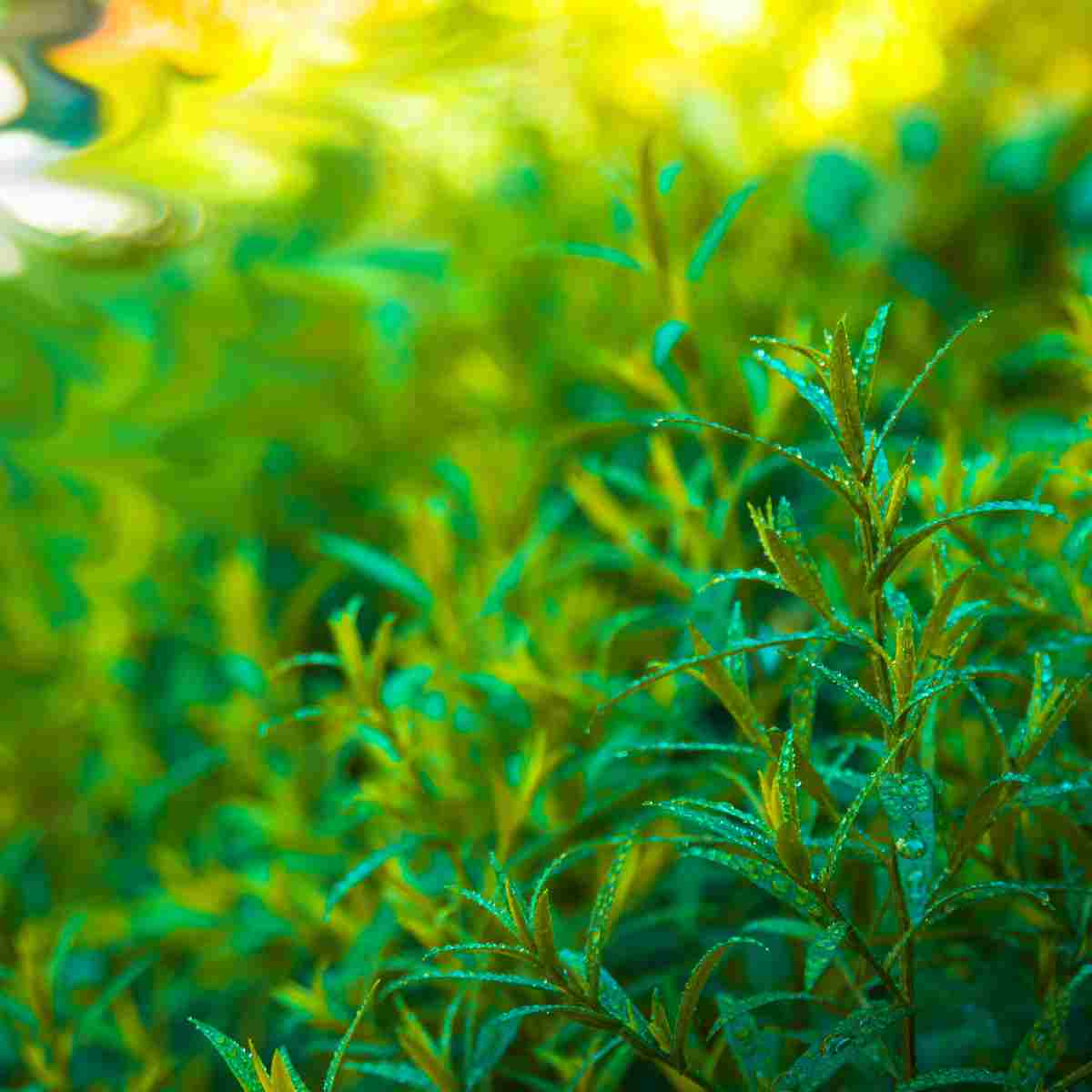
Tarragon is a herb with a distinctive flavour and one of the best culinary French herbs for savoury cooking. No French cook would be without it!
Tarragon is a perennial herb and is grown in a sunny position in well-drained soil. It is best grown from rooted cuttings in the spring.
The leaves are shiny and narrow, and it has tiny greenish-white flowers that only open in a very warm climate.
Tarragon leaves give a good flavour to green salads and raw vegetable salads.
Steep the herb in white wine vinegar, and you have a wonderfully flavoured tarragon vinegar.
Tarragon can be added to roast meats, poultry dishes and fish dishes.
Use it in a light buttery sauce to accompany mild vegetables such as marrow or artichokes.
Thyme (Thym)
Thyme is one of the essential herbs when making a bouquet garni.
It is a spreading evergreen plant and grows up to 45 cm high.
It has lots of little mauve flowers in the summer for about a month.
It is grown from seed in the spring and can also be grown from the division of an old plant or from cuttings.
It's a great plant for the rockery, where it needs little care!
It can also be grown in window boxes and used throughout the winter.
Thyme has a strong flavour, so it should be used sparingly.
It is added to meats, fish, soups, stews, and, of course, herb sauces.
French Herbs Tips
There are many more wonderful French herbs to use in your cooking, but I hope that these have given you a sample of some of the most popular ones used in French cooking.
You will now be able to recognise them from the photos, as they look so different when dried and packaged.
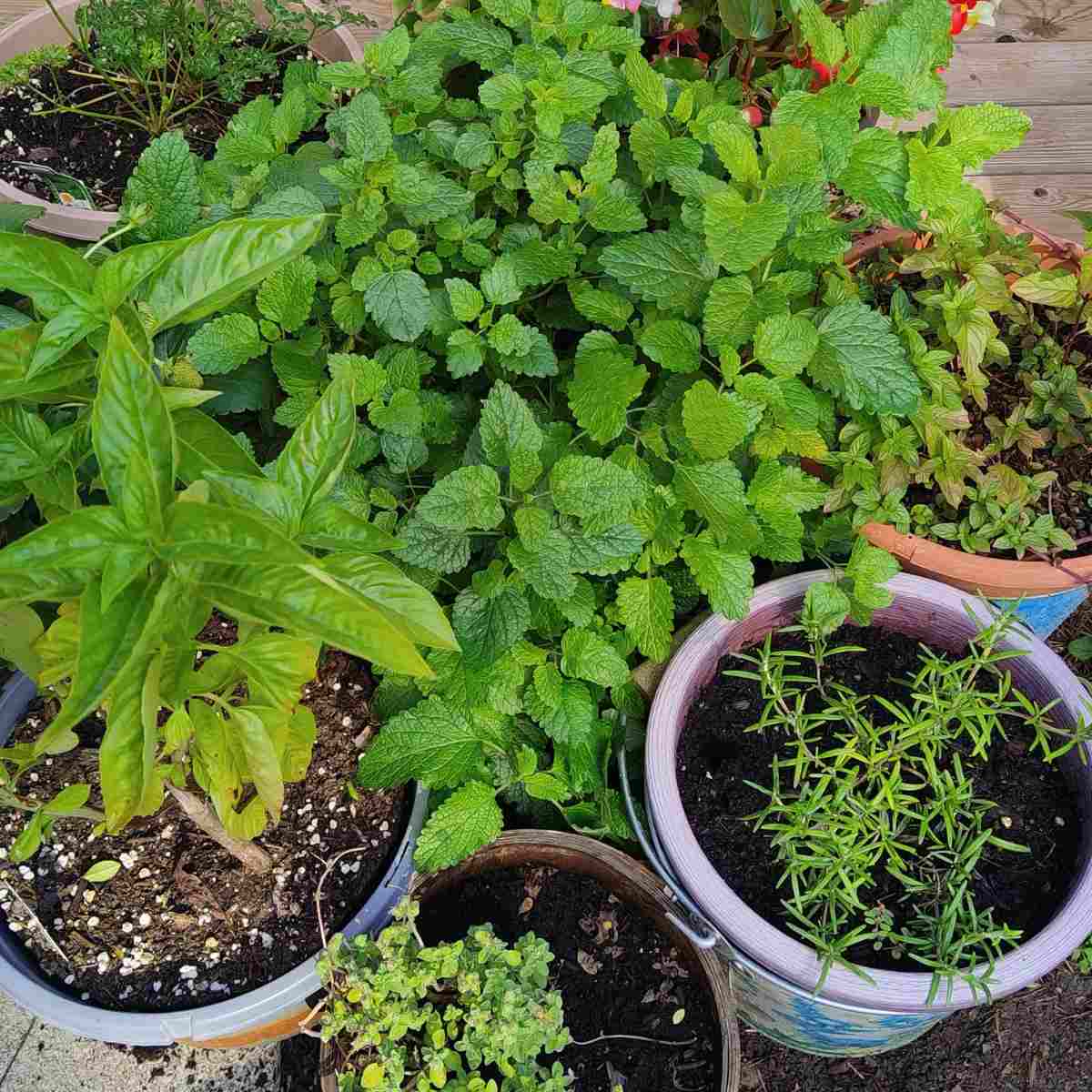
If you are lucky enough to have a garden to grow your own French herbs, that is great, but for those of you who do not have the room for this, you can grow them very well in containers, both inside and outside.
A few pots on the windowsill will give you a selection of herbs for a few months.
And as you pick them, they will grow again!




Comments
No Comments